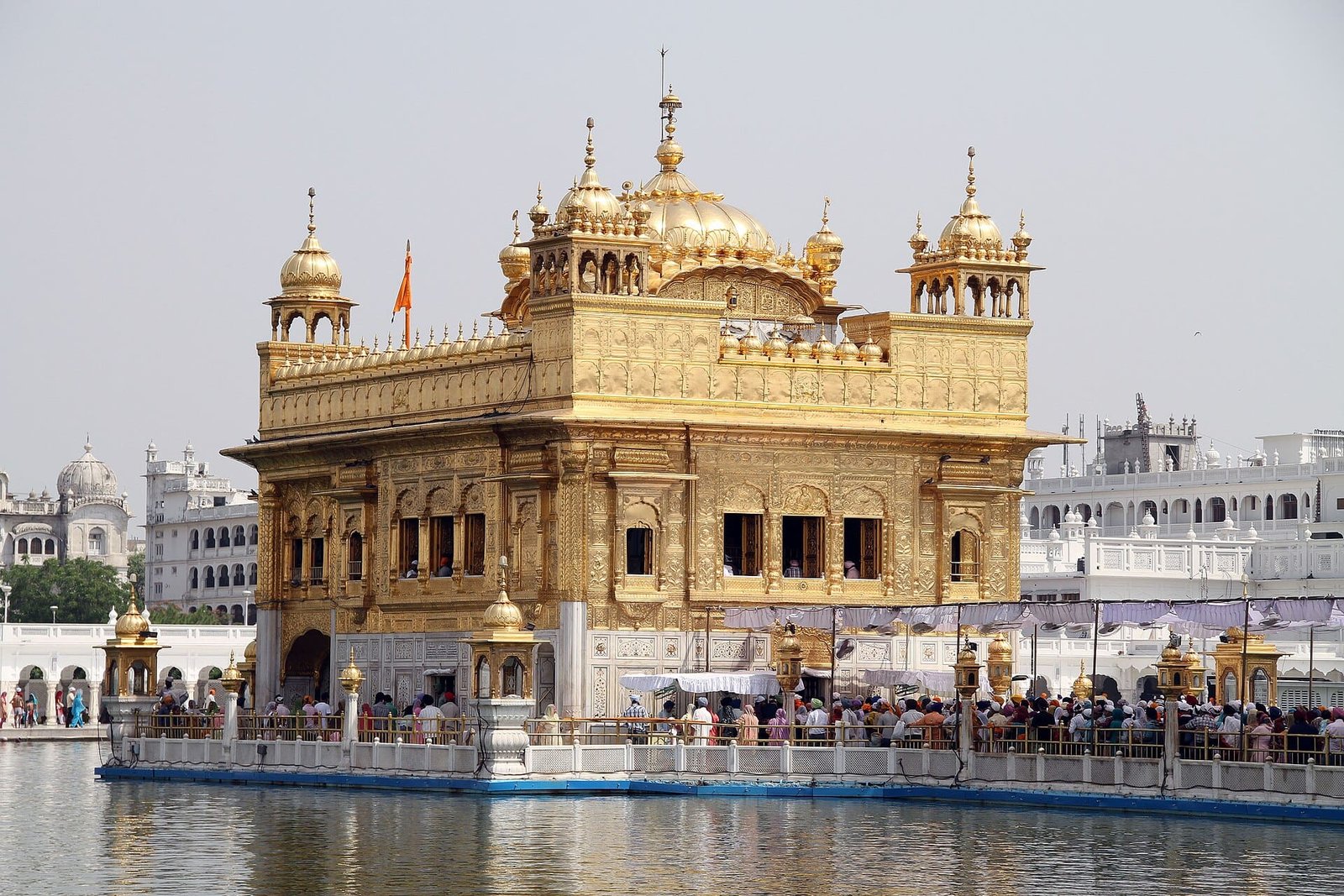
The spiritual heart of Punjab, Amritsar revolves around the luminous Golden Temple, where pilgrims gather day and night beside the sacred pool. Witness the high-energy retreat ceremony at the Wagah Border, pay your respects at Jallianwala Bagh, and feast on the city’s legendary kulchas and lassi.
Overview of Amritsar
The spiritual heart of Punjab, Amritsar revolves around the luminous Golden Temple, where pilgrims gather day and night beside the sacred sarovar. Founded in 1577 around this holiest shrine of Sikhism, the city radiates devotion, history and famously big-hearted Punjabi hospitality.
Amritsar is also a city of powerful history and unforgettable flavours — from the moving memorial at Jallianwala Bagh to the electric Wagah Border ceremony and a street-food scene that defines North Indian comfort food. It’s compact, vibrant and deeply atmospheric.
The gilded central shrine of Sikhism, set in the middle of a holy pool, glowing day and night. Its langar (community kitchen) serves free meals to tens of thousands daily — an extraordinary act of equality and service.
Wagah Border Ceremony
The high-energy daily flag-lowering retreat ceremony at the India–Pakistan border, a theatrical display of patriotism, drumming and crowd fervour just outside the city.
Jallianwala Bagh
A solemn, beautifully kept memorial garden marking the site of the 1919 massacre, with preserved bullet marks and an eternal flame honouring the victims.
Partition Museum
A moving, world-class museum housed in the old Town Hall that tells the human story of the 1947 Partition through personal accounts and artefacts.
Local Culture & Traditions
Amritsar’s culture is inseparable from Sikhism, built on the values of seva (selfless service), equality and community embodied in the Golden Temple’s langar. The warmth and generosity of Punjabis is legendary, and visitors of every faith are welcomed at the shrine.
The city pulses with Punjabi energy — bhangra and gidda dancing, the beat of the dhol, and festivals like Baisakhi and Guru Nanak Jayanti that fill the streets with colour, music and devotion.
Best Time to Visit Amritsar
Overall, the ideal time to plan your Amritsar trip is October–March. Here is a season-by-season guide to help you choose:
Winter (October–March): The best time to visit, with cool, pleasant days ideal for the temple, Wagah Border and exploring on foot. Festivals add extra colour.
Summer (April–June): Very hot with 40°C+ days; the Golden Temple is most comfortable in the early morning and after sunset.
Monsoon (July–September): Warm and humid with intermittent rain, but a quieter, greener time to visit.
Famous Foods & Cuisine
No trip to Amritsar is complete without savouring its iconic flavours. Here are the local specialities you must try:
Amritsari Kulcha — A crisp, stuffed and tandoor-baked bread, dripping with butter and served with chole and pickle — the city’s defining breakfast.
Amritsari Fish — Gram-flour-battered, deep-fried river fish seasoned with carom and spices — a famous local delicacy.
Langar Da Prashad — The simple, soul-warming dal, roti and kheer served free at the Golden Temple’s community kitchen.
Lassi — A thick, sweet yoghurt drink topped with a dollop of cream, served in giant glasses across the old city.
Chole Bhature — Fluffy fried bread with a spicy chickpea curry — a hearty Punjabi favourite.
Jalebi & Phirni — Crisp, syrupy jalebis and creamy rice-pudding phirni round off any Amritsari feast.
Travel Tips for Amritsar
Cover your head and remove your shoes before entering the Golden Temple — scarves and shoe deposits are provided free.
Visit the Golden Temple at dawn or after dark to see it beautifully lit and less crowded.
Leave by mid-afternoon for the Wagah Border to get a seat, as the ceremony draws large crowds.
Dress modestly and respectfully at all religious and memorial sites.
Come hungry — the old-city food trail around the temple is one of India’s best.
Amritsar Travel FAQs
Can anyone visit the Golden Temple?
Yes. The Golden Temple welcomes visitors of all faiths and backgrounds. Simply cover your head, remove your shoes, and dress modestly out of respect.
What time is the Wagah Border ceremony?
The flag-lowering ceremony takes place every evening before sunset — around 5:15 pm in winter and 6:15 pm in summer. Arrive 1–2 hours early for a good spot.
How many days are enough for Amritsar?
Two days is ideal — one for the Golden Temple, Jallianwala Bagh and the Partition Museum, and another for the Wagah Border and the city’s food trail.
Is the Golden Temple langar really free?
Yes. The langar serves free vegetarian meals to all visitors around the clock, run entirely by volunteers as an expression of equality and service.