
Amber Fort
A magnificent hilltop fort-palace of honey-coloured sandstone and marble, famed for its mirrored Sheesh Mahal, grand courtyards and sweeping views over Maota Lake.
The rose-hued capital of Rajasthan, Jaipur is a living museum of Rajput grandeur. Climb to the hilltop Amber Fort, admire the honeycomb façade of the Hawa Mahal, and lose yourself in the City Palace’s courtyards and the colourful bazaars of the old walled city.
The rose-hued capital of Rajasthan, Jaipur is a living museum of Rajput grandeur and the gateway to India’s Golden Triangle. Founded in 1727 and painted pink in welcome to royalty, its walled old city of palaces, bazaars and observatories remains one of India’s most photogenic destinations.
Jaipur blends majestic hilltop forts with vibrant street life, world-class craft shopping and a warm, regal hospitality. It’s compact enough to explore in a few days yet rich enough to reward much longer, making it a favourite for first-time and repeat visitors alike.
A magnificent hilltop fort-palace of honey-coloured sandstone and marble, famed for its mirrored Sheesh Mahal, grand courtyards and sweeping views over Maota Lake.
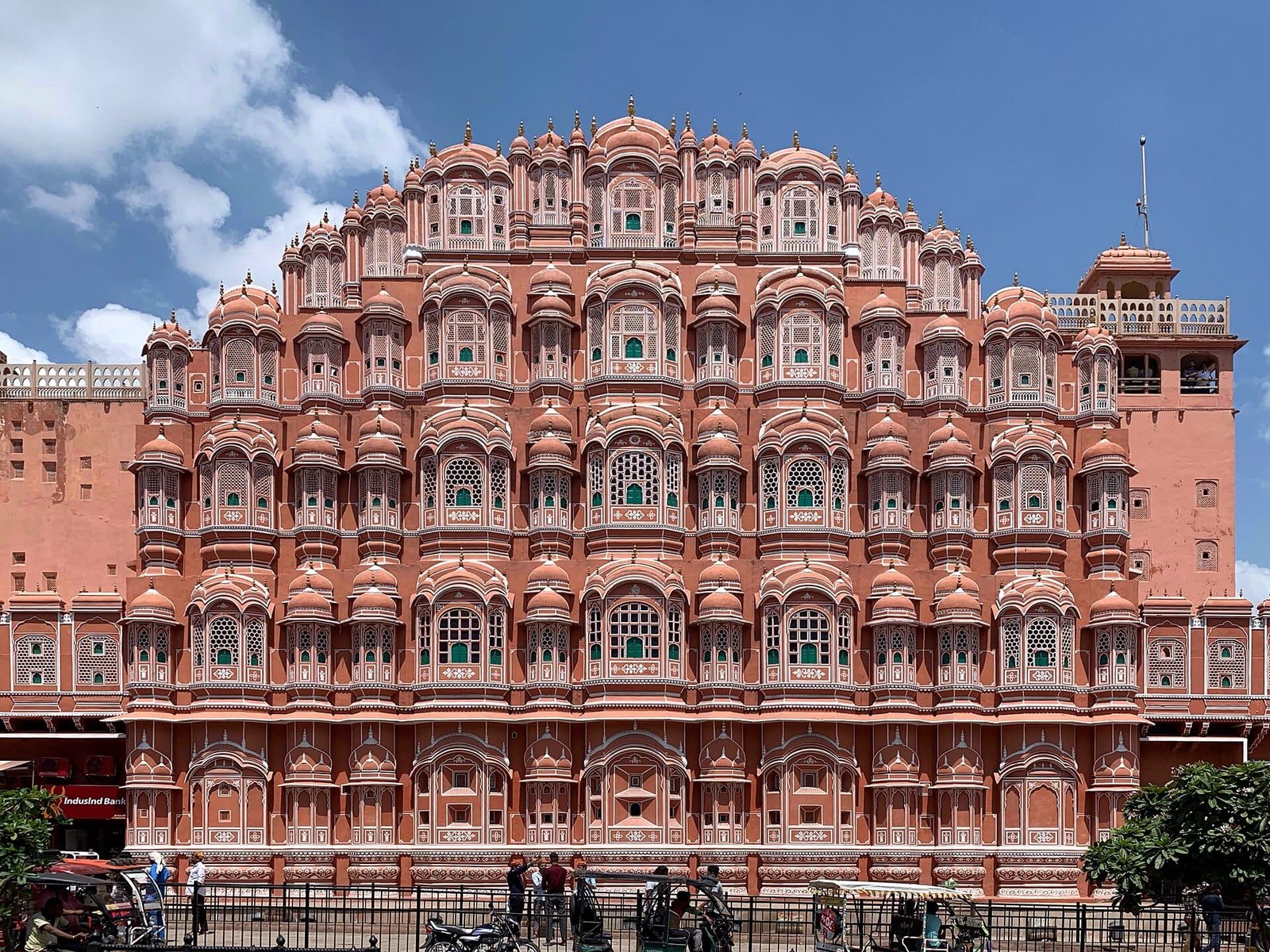
The iconic ‘Palace of Winds’, a five-storey honeycomb façade of 953 latticed windows built so royal women could watch street life unseen — Jaipur’s most photographed landmark.
A still-royal complex of courtyards and museums beside Jantar Mantar, a UNESCO-listed 18th-century observatory with the world’s largest stone sundial.
Hilltop fortresses overlooking the city, offering panoramic sunset views and, at Jaigarh, Jaivana — once the world’s largest wheeled cannon.
Jaipur is the cultural heart of Rajasthan, where folk musicians, puppeteers and Kalbeliya dancers keep centuries-old traditions alive. The city is a powerhouse of crafts — blue pottery, block-printed textiles, gemstone cutting and jewellery — much of it still made in family workshops.
Festivals are spectacular here: the Teej and Gangaur processions fill the streets with colour, while the Jaipur Literature Festival draws thinkers from around the world each winter.
Overall, the ideal time to plan your Jaipur trip is October–March. Here is a season-by-season guide to help you choose:
No trip to Jaipur is complete without savouring its iconic flavours. Here are the local specialities you must try:
Two to three days is ideal to cover Amber Fort, the City Palace, Hawa Mahal, Jantar Mantar, the hilltop forts and the bazaars at a comfortable pace.
In 1876 the city was painted pink — the traditional colour of hospitality — to welcome the Prince of Wales, and the old walled city has retained the hue ever since.
Jaipur is famous for gemstones and jewellery, blue pottery, block-printed and bandhani textiles, mojari footwear and handicrafts, mostly found in the old-city bazaars.
Yes. Jaipur forms India’s Golden Triangle along with Delhi and Agra, one of the country’s most popular cultural travel circuits.