
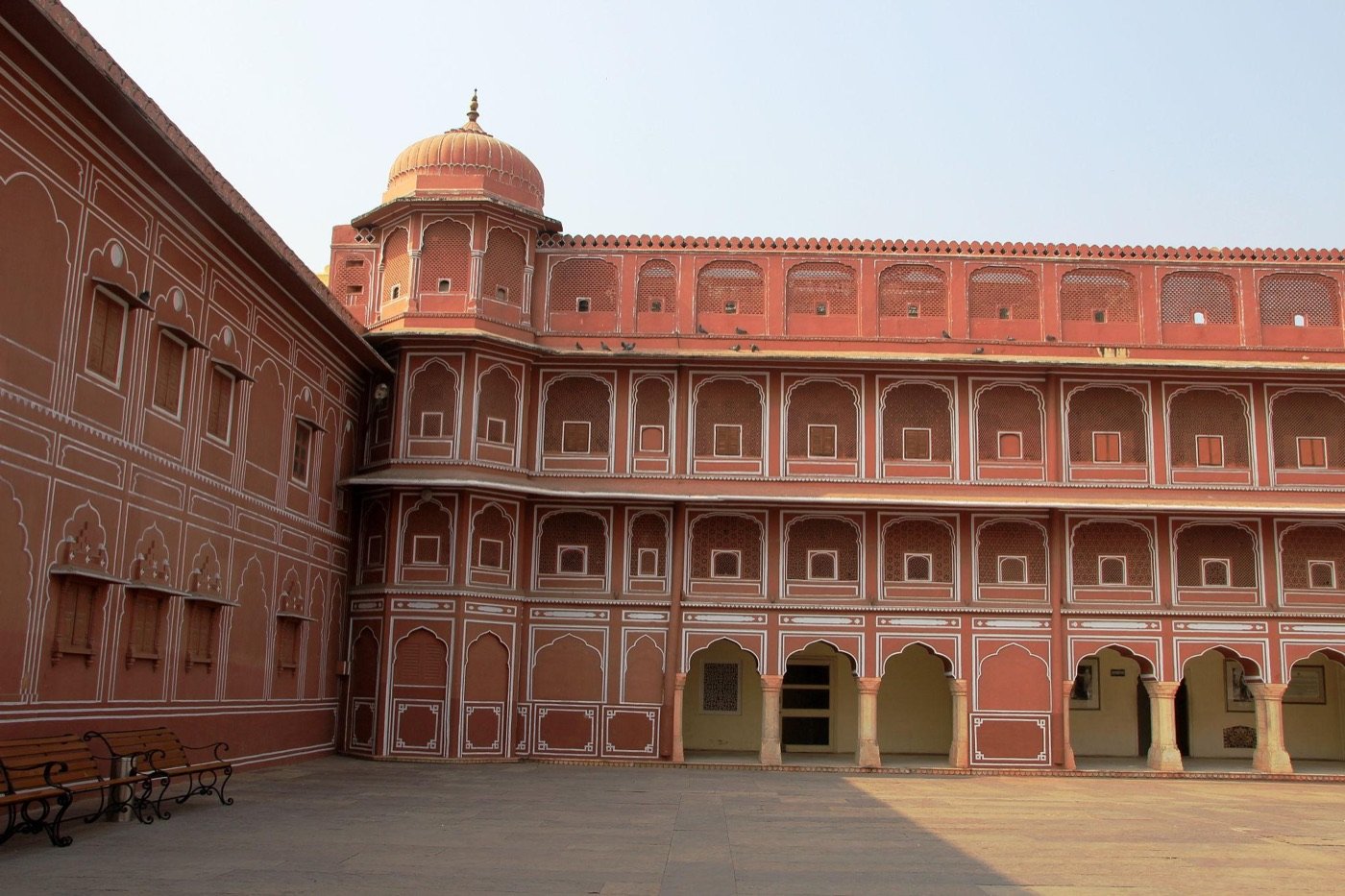
Jaipur earned the nickname "Pink City" in 1876 when Maharaja Ram Singh ordered the city painted terracotta pink to welcome the Prince of Wales. Walk through the old city today and that warm, rosy hue still defines every shopfront, haveli, and archway. It is as if the city itself is blushing with pride at the centuries of history it holds.
Founded in 1727 by Maharaja Sawai Jai Singh II — one of India's most accomplished astronomers and city planners — Jaipur was the subcontinent's first planned city, built on the principles of Vastu Shastra. Today it is a UNESCO World Heritage City and the jewel of the Golden Triangle tourist circuit.
Amber Fort
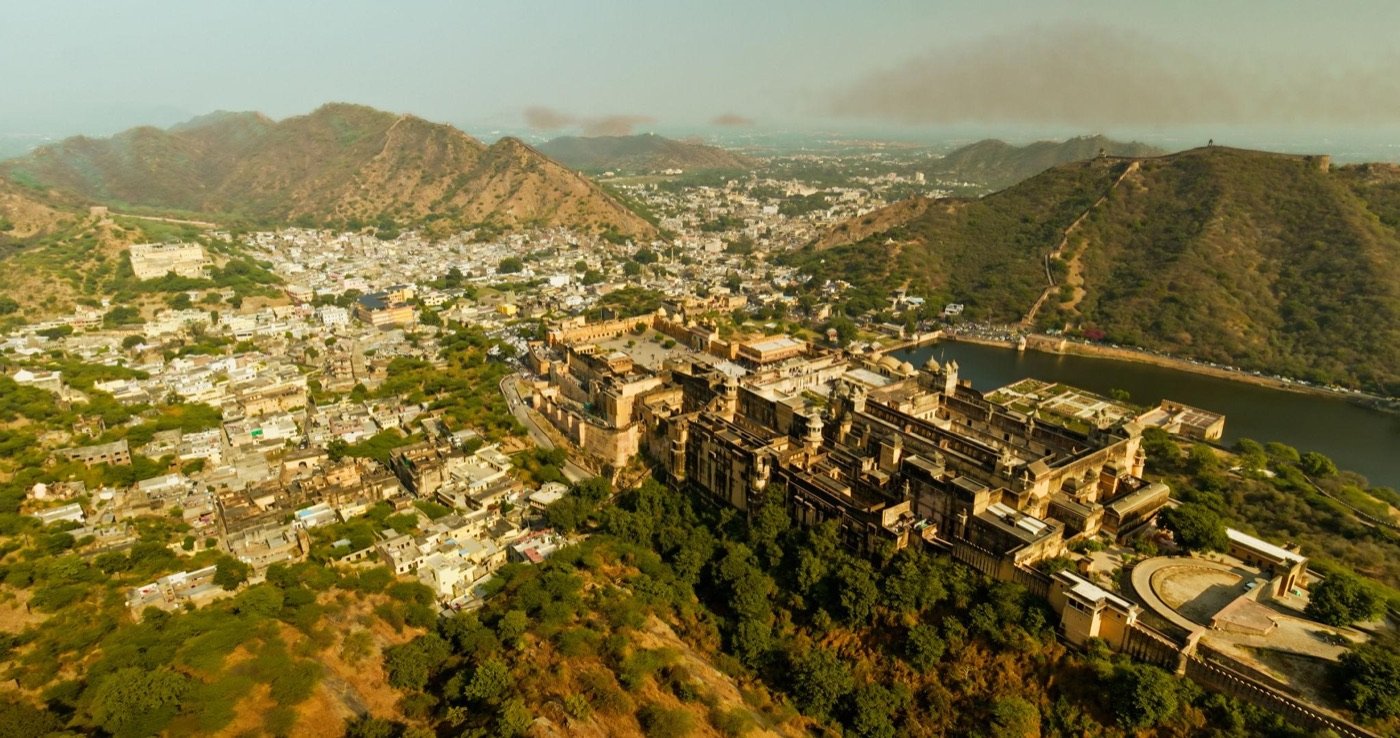
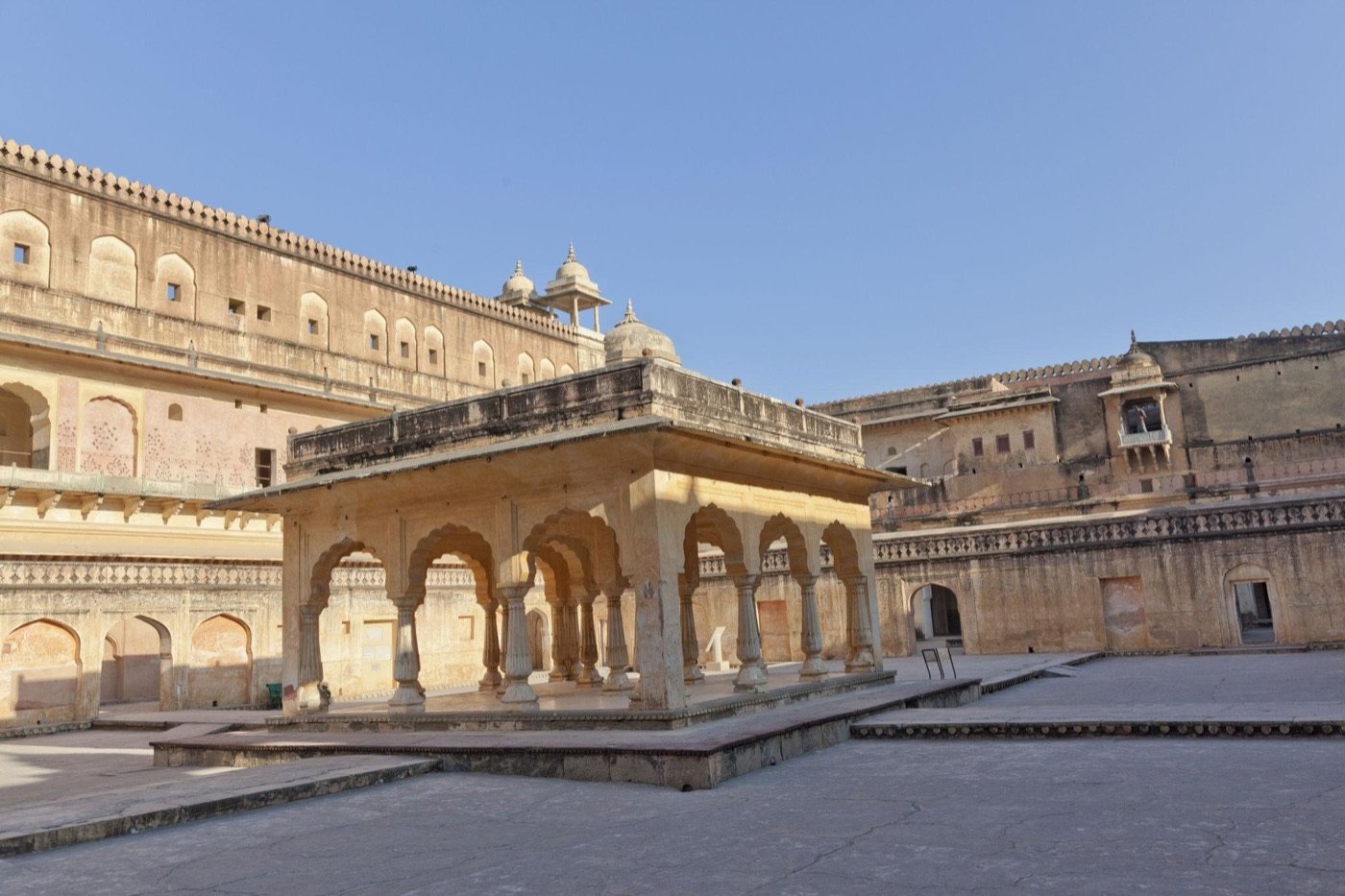
Perched dramatically on a hilltop overlooking the Maota Lake, Amber Fort is the undisputed crown of Jaipur's heritage. Built in 1592, the fort is a masterpiece of Rajput and Mughal architecture — gleaming white marble and red sandstone courts that open onto each other like chapters of a book. Do not miss the Sheesh Mahal (Hall of Mirrors), where a single candle flame multiplies into a thousand reflections.
The elephant ride up to the fort gate has been the traditional way to arrive, though today a Jeep is more common. Reach early — by 8 am — to beat the heat and the queues.
Hawa Mahal — Palace of Winds
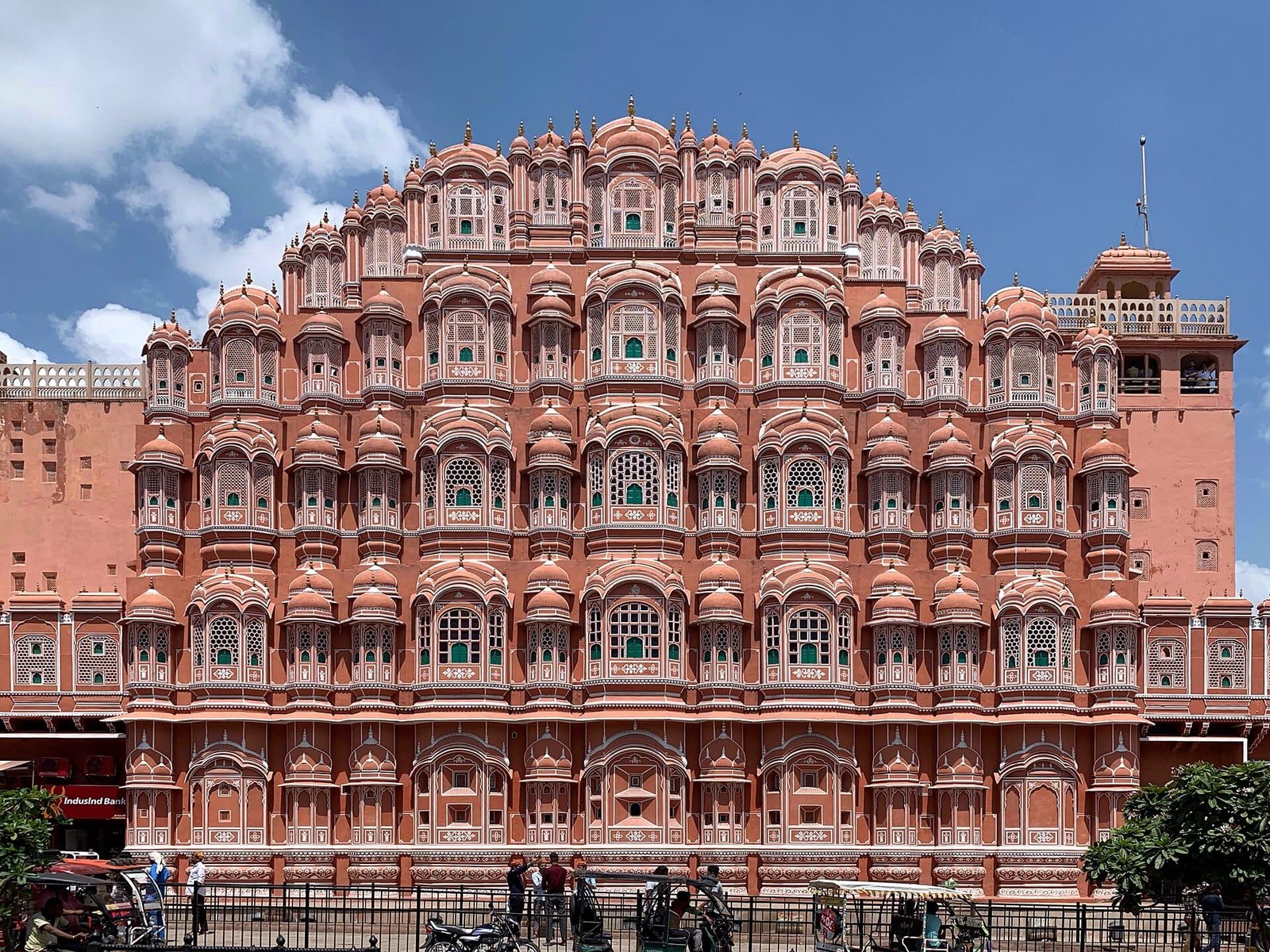
Built in 1799 for the royal ladies who observed street festivals while maintaining purdah, the Hawa Mahal is Jaipur's most recognisable icon. Its five-storey honeycomb facade of 953 small windows (jharokhas) was designed to allow a cool breeze to pass through — a masterwork of passive ventilation that would impress any modern architect.
Best photographed from the street outside at sunrise, when the terracotta facade glows golden in the early light.
City Palace
The City Palace complex sits at the heart of the old city and has been the seat of Jaipur's royal family for nearly 300 years. The Chandra Mahal wing is still a royal residence (and thus partially off-limits), but the rest of the palace — the Diwan-i-Khas, the Mubarak Mahal, the seven-storey Chandra Mahal tower — is open for exploration. The two massive silver urns in the Diwan-i-Khas, each holding 4,000 litres of Ganges water, are listed in the Guinness World Records.
Jantar Mantar
Maharaja Jai Singh's fascination with astronomy produced five remarkable observatories across India. Jaipur's Jantar Mantar — a UNESCO World Heritage Site — contains 19 giant astronomical instruments built from stone and marble, including the Samrat Yantra, the world's largest sundial at 27 metres tall. It can accurately calculate the time to within two seconds.
Jaipur's Craft Heritage
Beyond its architecture, Jaipur is one of India's great craft cities. Bazaars specialising in a single craft — Johari Bazaar for gems and jewellery, Bapu Bazaar for block-print textiles, Tripolia Bazaar for lac bangles — give the old city its living, breathing character.
- Blue pottery: A Jaipur specialty with Persian origins; look for hand-painted tiles and vessels
- Gemstone cutting: Jaipur handles 75% of the world's coloured gemstones
- Block printing: Sanganer and Bagru near Jaipur produce exquisite hand-printed cottons
- Miniature paintings: The Rajput-Mughal painting tradition is alive in the city's many artist studios
When to Visit & Getting Around
October to March is the best time — pleasant days, cool nights, and the vibrant Jaipur Literature Festival in January. Summer (April–June) is brutal, with temperatures touching 44°C. Auto-rickshaws, cycle-rickshaws, and app-based cabs are all available; for the old city, a cycle-rickshaw is the most atmospheric way to navigate the narrow lanes.