
There is a saying in Lucknow: "Pehle aap" — "After you." This culture of elaborate courtesy, called tehzeeb (refinement), permeates everything about the city — the way its residents speak, the way they dress, and perhaps most significantly, the way they cook.
Lucknow's cuisine is the direct heir of the Nawabi court kitchens of the 18th and 19th centuries, where chefs competed to produce dishes of extraordinary subtlety and sophistication. The result is a culinary tradition unlike anything else in India — one built on slow cooking, fragrant spicing, and the use of edible silver leaf as a finishing touch.
Galouti Kebab: The Masterpiece
Legend holds that the galouti kebab was created for a toothless Nawab who still demanded to eat fine meat. The result was a kebab so finely ground and tenderised with raw papaya that it literally melts on the tongue. At Tunday Kababi in Aminabad — the restaurant that has been serving galouti kebabs since 1905 — the recipe is said to include over 160 spices.
Eat it the traditional way: wrapped in a warm sheermaal (saffron flatbread) with a dab of mint chutney.
Kakori Kebab
Named after the town of Kakori near Lucknow, this seekh kebab is made from finely minced lamb mixed with raw papaya, saffron, cardamom, and a proprietary spice blend, then grilled on long skewers over charcoal. It has a finer, silkier texture than a standard seekh kebab and a fragrance that fills the street when the grill is lit.
Lucknowi Biryani: Dum Pukht
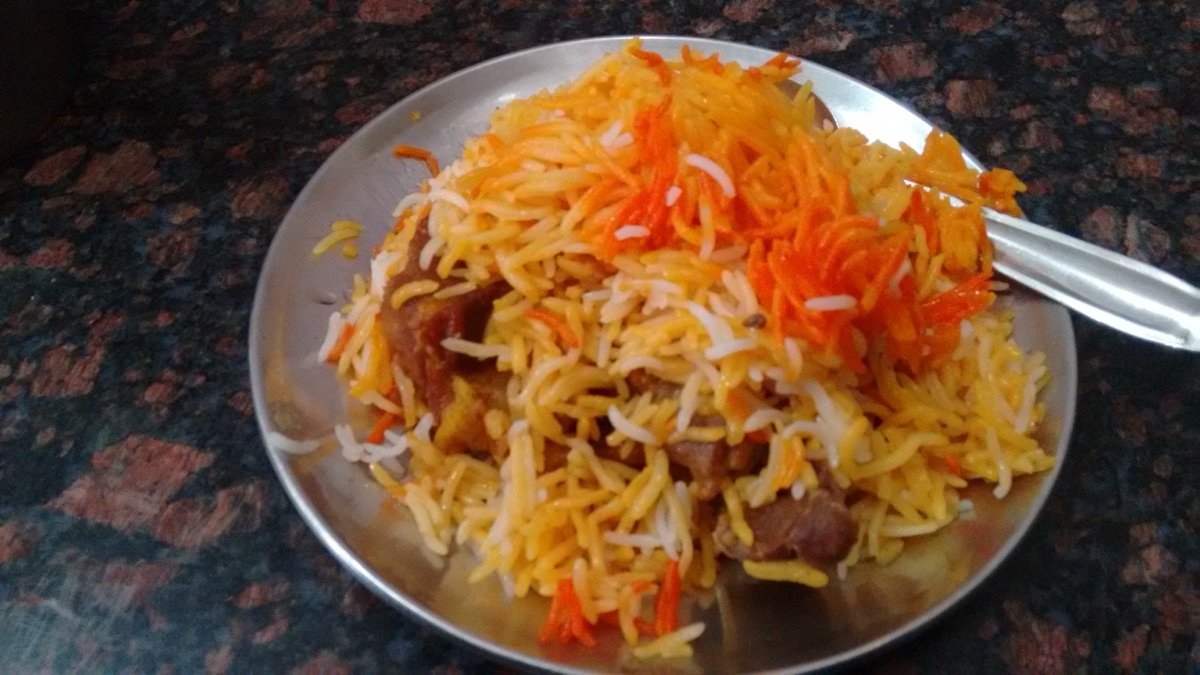
Lucknow's biryani tradition — dum pukht — is the original slow-cooked biryani, prepared by sealing meat and par-cooked rice in a heavy-bottomed pot with dough and cooking it over gentle heat for hours. The result is intensely aromatic and lighter than Hyderabadi or Kolkata biryani — the spicing is more restrained, allowing the quality of the meat and the delicacy of the basmati to take centre stage.
The best dum biryani in the city is served at Wahid Biryani on Hazratganj and at Idris Biryani near the Chowk area.
Beyond Kebabs: The Sweet City
- Sheermal — a saffron-infused flatbread eaten with kebabs or on its own
- Malai makkhan — whipped morning dew cream that is so light it melts instantly on the tongue; only available from November to February
- Basket chaat from Ram Asrey on Hazratganj — a multi-layered chaat served in an edible pastry basket
- Lucknow's Royal Café — famous for its Lucknowi mutton biryani and creamy rabri
- Makhan Malai — a seasonal morning delicacy made from dew, saffron, and cream, found only in winter
Heritage Walks & Food Tours
The best way to eat in Lucknow is to walk. The Chowk bazaar area near the Rumi Darwaza has the densest concentration of historic eateries, many of which have been in business since the Nawabi era. A guided heritage food walk through Chowk, Aminabad, and Hazratganj takes 3–4 hours and typically includes eight to ten tastings.